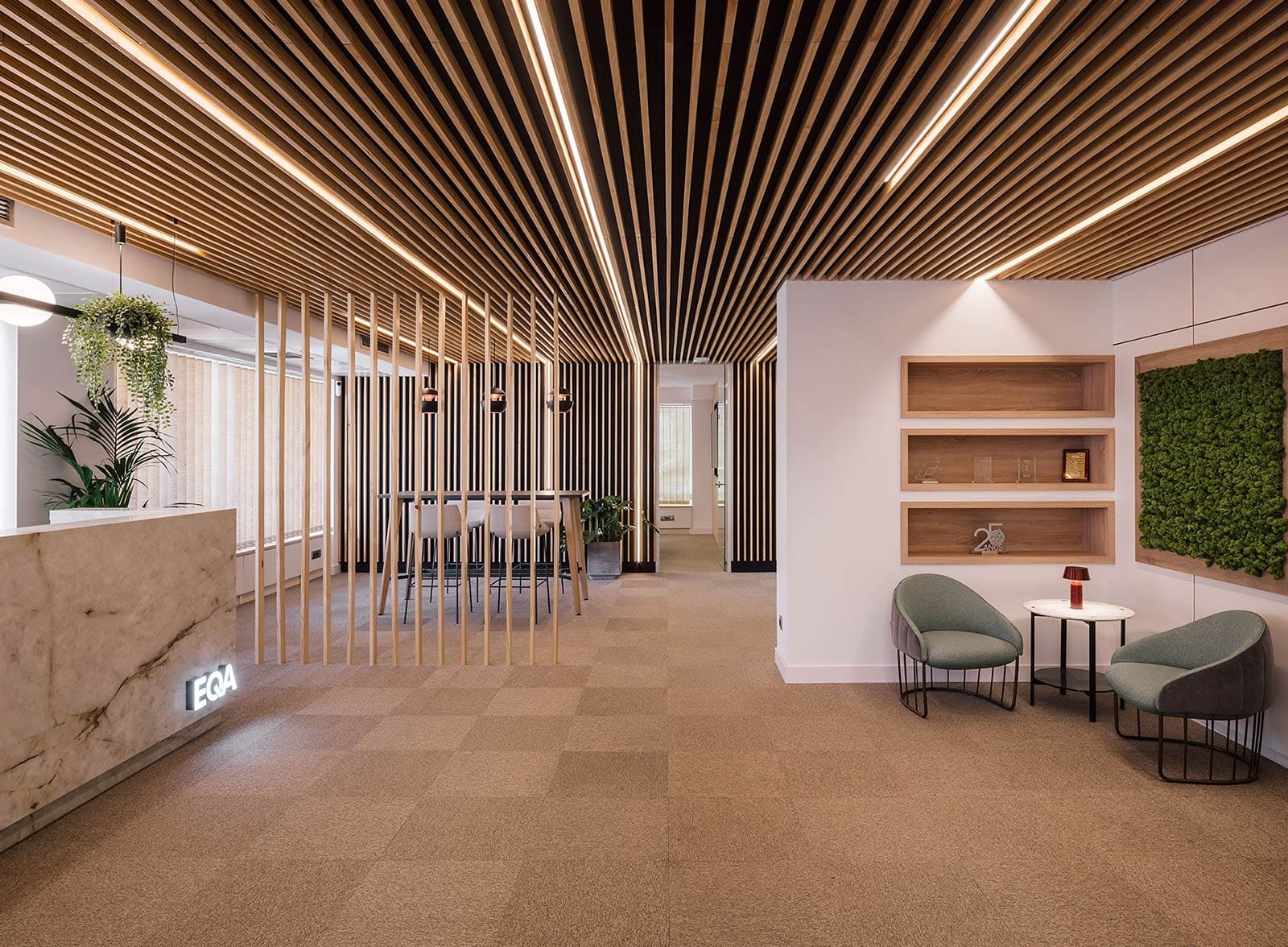
Noise in open-plan offices affects concentration, stress, and performance. Discover how acoustic conditioning can improve productivity and comfort in your workspace.
Office noise is one of the most frequently cited problems by employees when asked what prevents them from working effectively.
Between colleagues' voices, phone calls, air conditioning units, and device notifications, the noise level in an open-plan office can easily exceed 60 dB.
The result is an environment where it's difficult to concentrate, meetings drag on, and accumulated stress takes its toll.
With acoustic conditioning solutions, it's possible to control this indoor noise, improve comfort, and maintain the aesthetics of the space.
Noise in Open-Plan Offices: The Silent Problem of Productivity
Open-plan offices became popular with the idea of fostering collaboration. However, the acoustic reality of these spaces is complicated: without partitions or sound-absorbing ceilings, sound bounces and is amplified.
According to various studies, an employee in an open-plan office loses an average of 15 to 25 minutes a day due to noise interruptions. And the problem isn't limited to loud noise: even background conversations at a moderate volume affect the ability to concentrate.
The materials commonly used in these offices (glass, polished concrete, metal surfaces) exacerbate the situation because they reflect sound instead of absorbing it. The noise is amplified, and the space becomes an uncomfortable environment for working.
How Noise Affects Concentration, Stress, and Work Performance
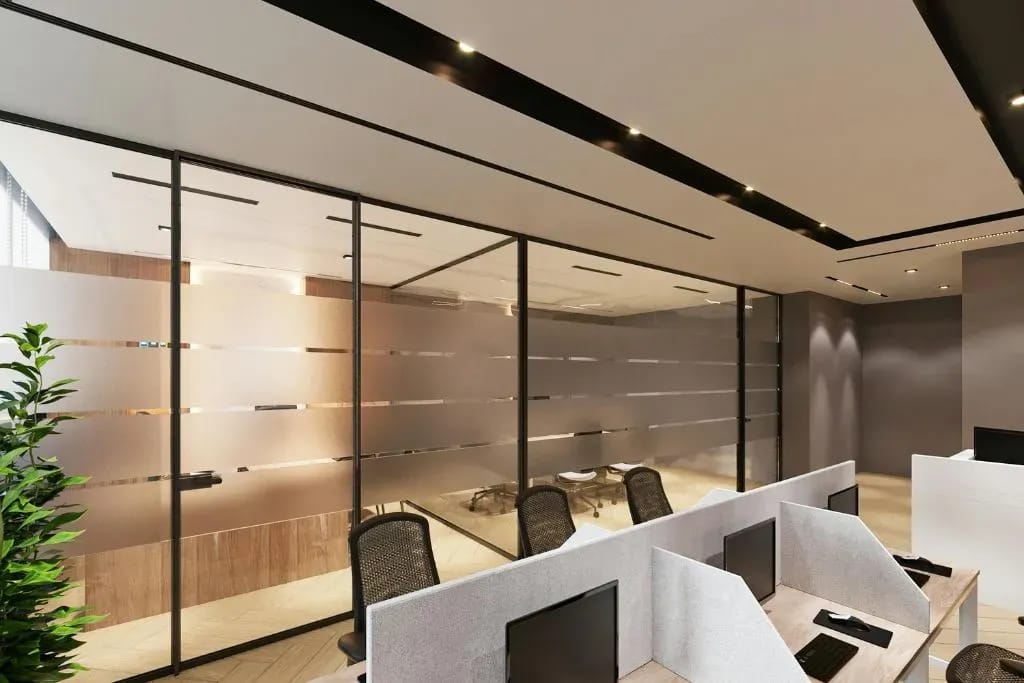
When the noise level in an office exceeds 55–60 dB (the equivalent of several people talking at once), the ability to perform tasks requiring sustained attention drops significantly.
The consequences go beyond productivity. Constant noise raises cortisol levels, causes auditory fatigue, and increases the error rate. Employees working in noisy environments report more stress, lower job satisfaction, and higher turnover.
It also affects communication: in meeting rooms where sound echoes too much, video conferences become difficult, and face-to-face conversations require raising one's voice. The result is a self-reinforcing cycle: more noise generates more noise.
What does your office need: to reduce external noise or control internal noise?
It's important to distinguish between these two problems. One is the noise that enters from outside (traffic, construction, neighbors), which is resolved by addressing the building's envelope: windows, partitions, and floors.
The second, and most common, type of noise is generated within the space itself: conversations, equipment, and air conditioning. This problem is solved with acoustic conditioning, by placing sound-absorbing materials on the ceiling, walls, and strategic areas to reduce reverberation and control how sound propagates.
In most offices, the real problem is the second type. And the good news is that it can be solved without construction work, using modular solutions that are installed on existing surfaces.
Acoustic conditioning solutions for offices
The goal is not to eliminate all sound, but to control it.
This involves reducing sound reflection off surfaces, improving the clarity of conversations, and creating zones with varying levels of acoustic privacy by placing absorbent materials in the appropriate locations.
Acoustic ceiling panels
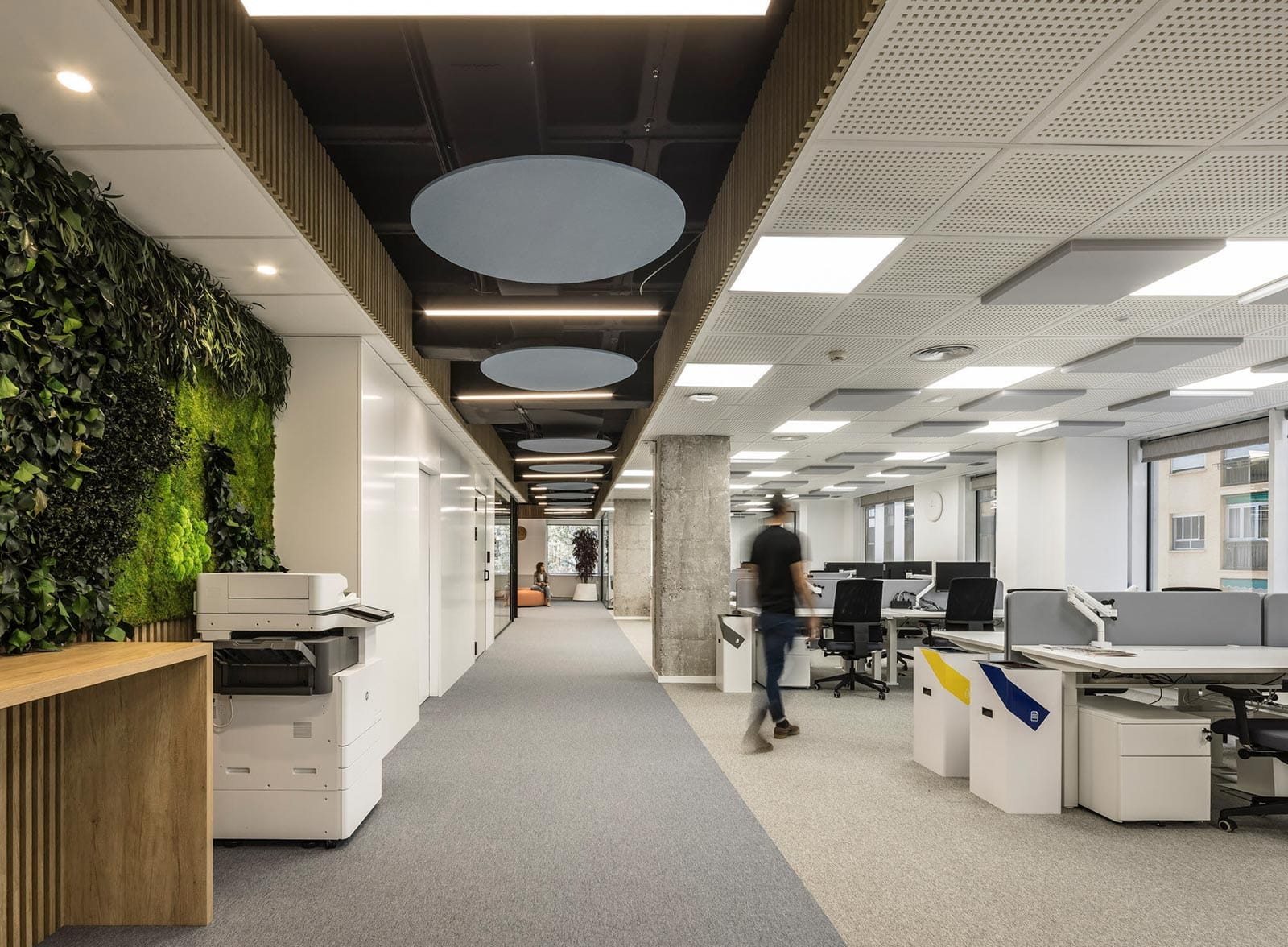
The ceiling is the surface with the greatest impact on office acoustics. Installing suspended absorbent panels or acoustic baffles drastically reduces reverberation time without taking up valuable space.
Collections like Ideacustic offer different ceiling panel formats adapted to the needs of each space: from large-format flat panels to vertical baffles that integrate seamlessly into the interior design.
Acoustic wall coverings
Side walls are the second key surface. Wall panels like those in the Ideaperfo collection reduce the first sound reflections, which are the most disruptive to communication in meeting rooms and areas where focused work is needed.
These panels are integrated into the office design as just another wall covering, with different finishes and colors. They don't look like an acoustic treatment; they look like part of the interior design.
Acoustic dividers and decorative panels
In open-plan offices, acoustic dividers allow you to create distinct zones without building partitions. They are movable or semi-fixed elements that absorb sound and provide visual privacy.
Acoustic booths: total privacy in open spaces
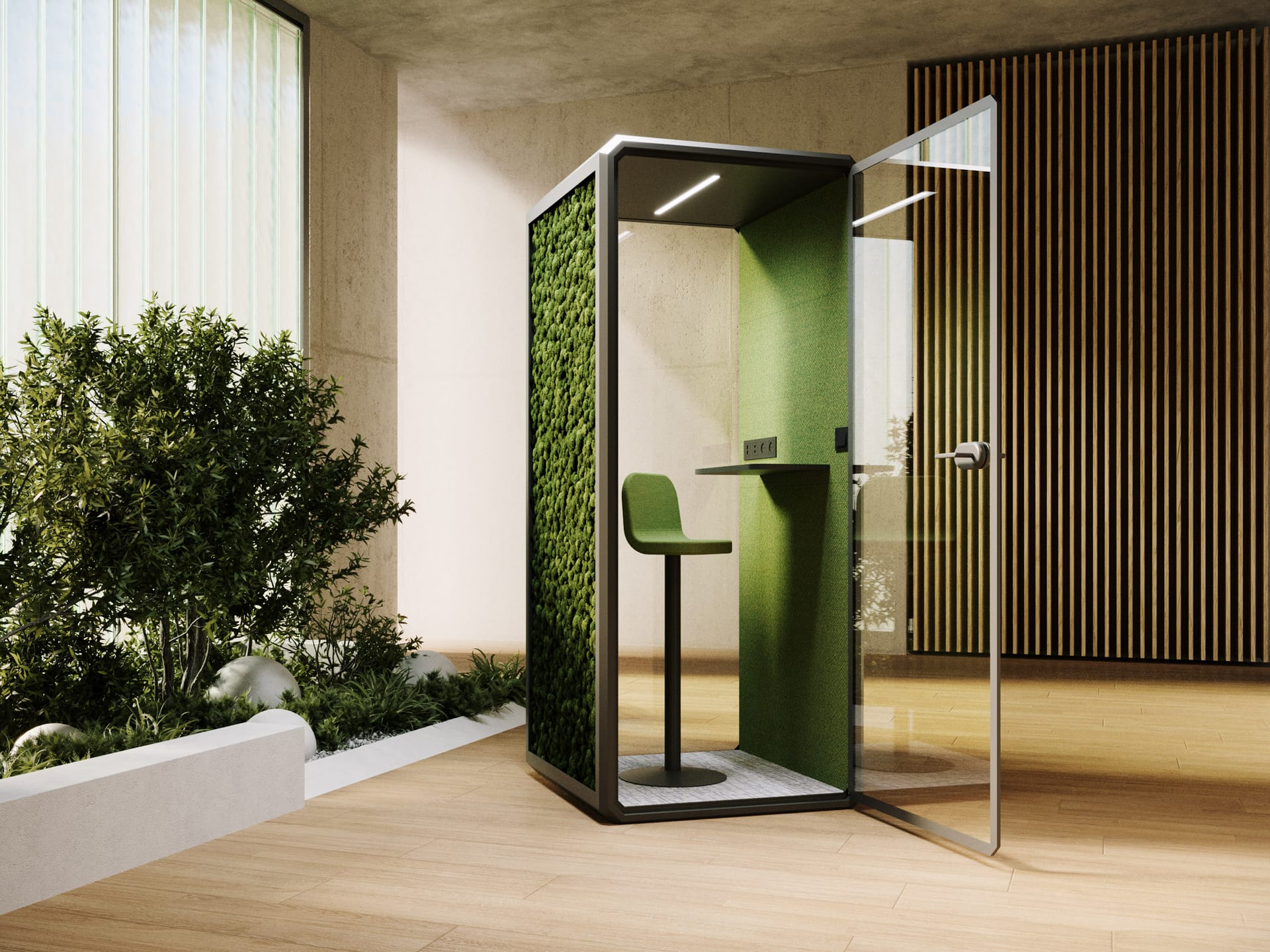
Ideazone acoustic booths from Ideatec offer a closed, soundproof, and ventilated space within your office. They are modular, require no construction work, and can be installed in just a few hours. They are designed for calls, video calls, or work that requires absolute concentration, without depending on the availability of a meeting room.
Ideatec's Office Projects
Ideatec has completed numerous acoustic conditioning projects in workspaces, adapting solutions to the specific characteristics of each office. Two representative examples:
Spin Master Offices — Madrid
The Spin Master offices in Madrid, designed by Destudio, are an example of a creative workspace where acoustics play a fundamental role.
The project combined open collaborative work areas with meeting rooms and quiet spaces for focused work. Ideatec intervened with a combination of ceiling panels to control ambient noise and biophilic panels incorporating natural moss, providing acoustic absorption and a visual component that enhances the perception of space.
Romeu Group Offices — Port of Valencia
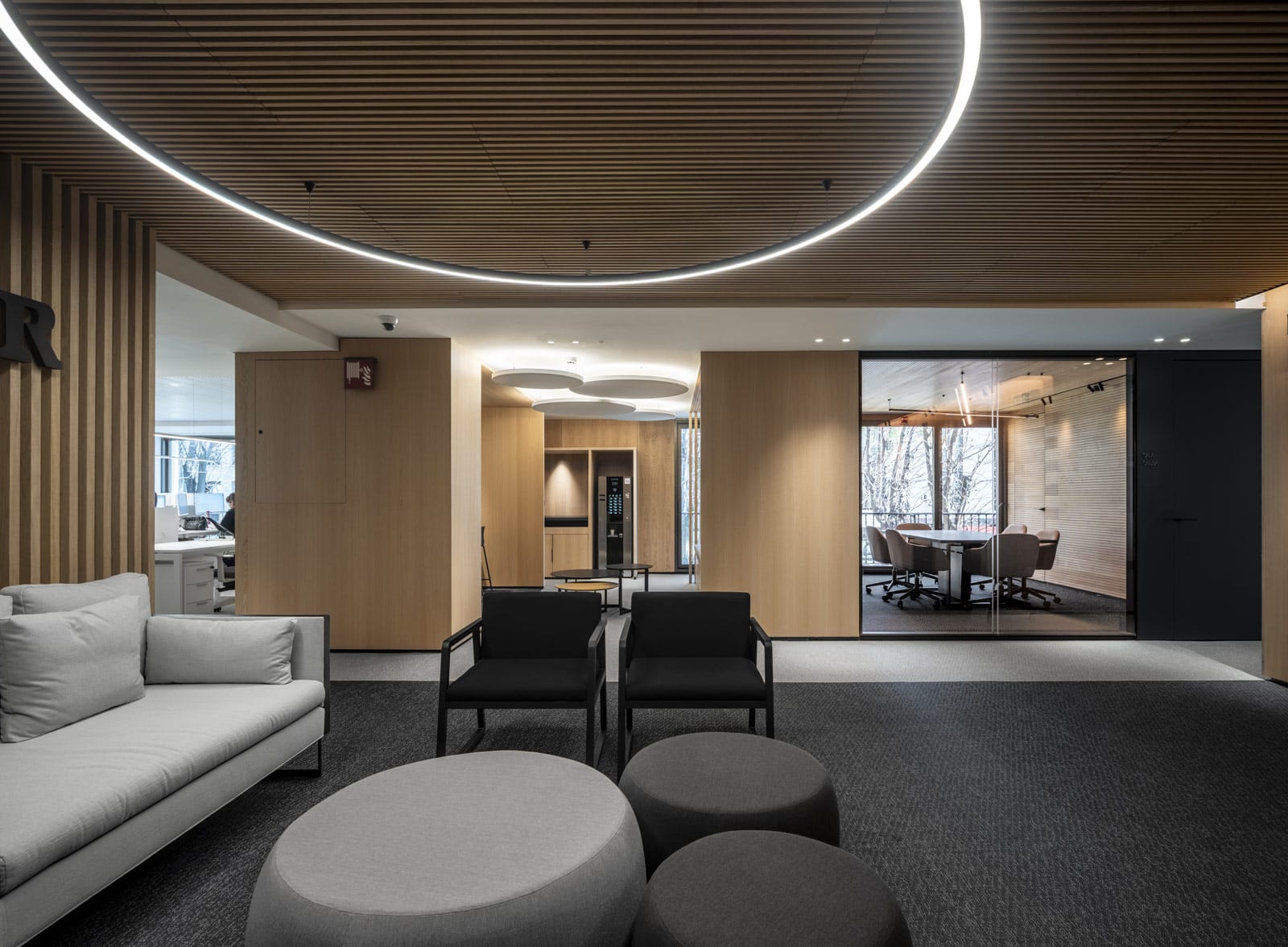
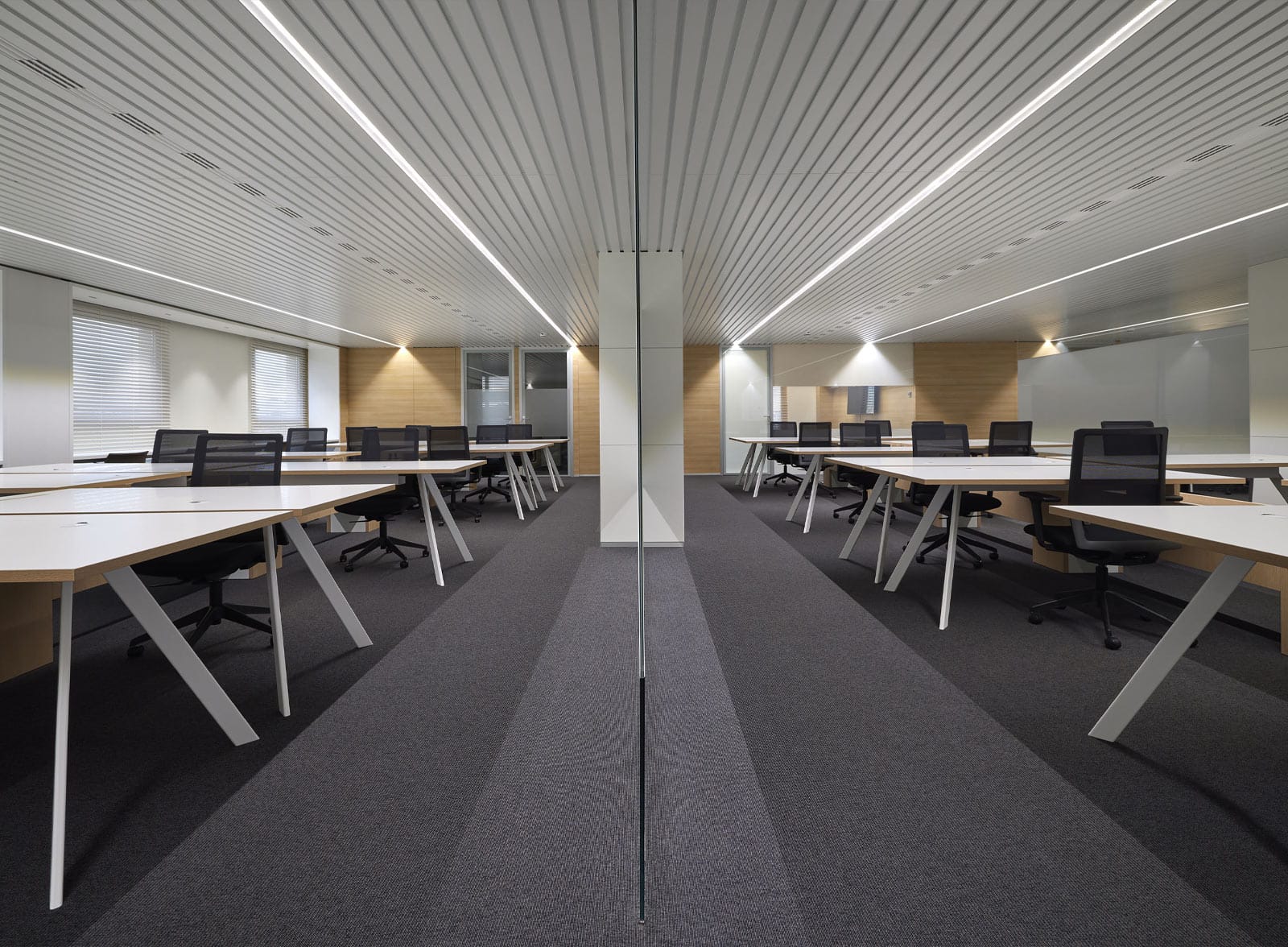
At the Romeu Group offices in the Port of Valencia, with interior design by María Castellet, the challenge was to create an acoustically balanced environment in a corporate space with open areas, meeting rooms, and collaborative zones.
The solution consisted of installing backlit acoustic panels on the ceiling, which combine high sound absorption performance with an elegant and discreet design. The result: a quieter workspace, improved communication in meetings, and reduced auditory fatigue for the teams.
Regulations and Recommendations for Acoustic Comfort in Offices
Spanish regulations (CTE DB-HR) establish noise protection requirements for buildings, although their main focus is on noise transmission between rooms. For interior acoustic comfort in offices, the most relevant references are the UNE-EN ISO 3382 standard (reverberation time) and WHO recommendations.
The WHO recommends that noise levels in offices should not exceed 55 dB for customer service tasks and 45 dB for work requiring concentration. Many open-plan offices easily exceed these limits.
Furthermore, certifications such as WELL and LEED include specific credits for acoustic comfort, making acoustic conditioning an increasingly common requirement in new construction or renovation office projects.
Is noise affecting your office?
If noise is a problem in your workspace, we can help you solve it. At Ideatec, we design customized acoustic conditioning solutions for offices, coworking spaces, and corporate spaces.
Request a free quote and we'll advise you on the best solution for your space.

