

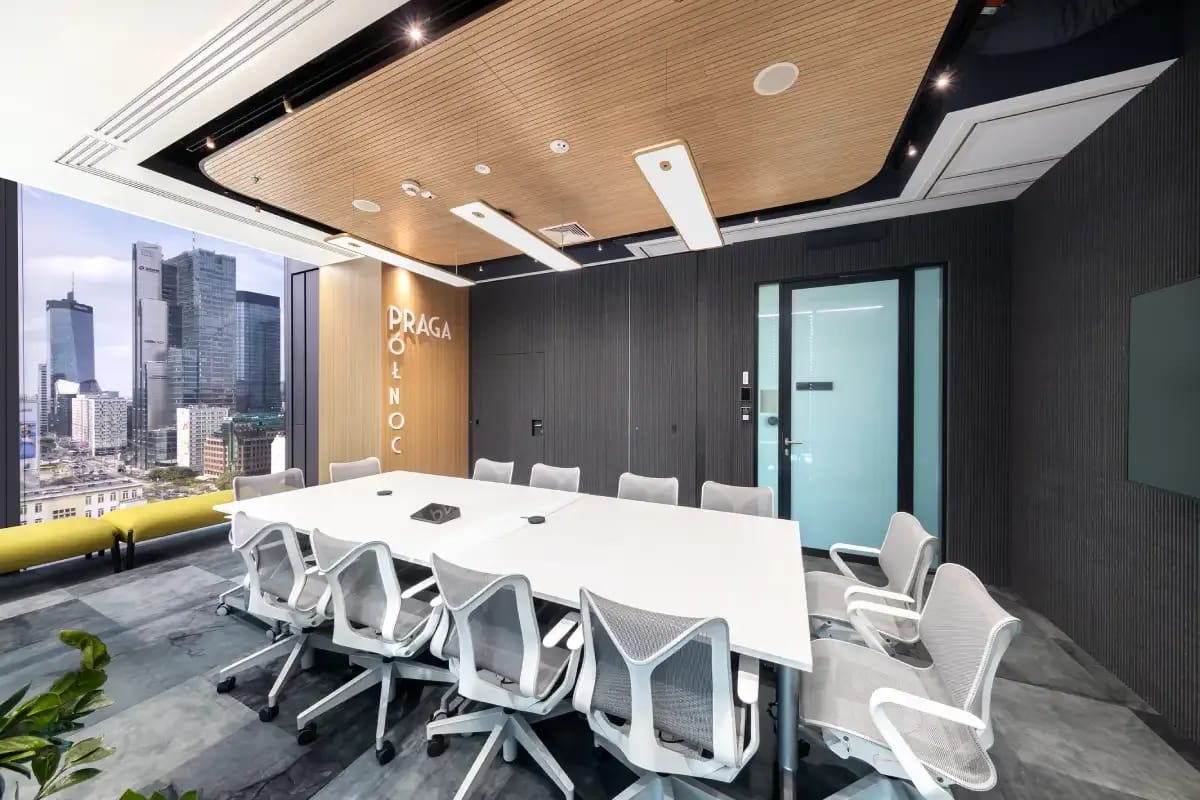
Acoustics are key in modern architecture. Discover how they can be integrated to enhance well-being, functionality and design.
Modern architecture does not merely seek to create aesthetically pleasing spaces. These spaces must also be functional and promote the well-being and comfort of their occupants. Acoustics influence the sensory experience, productivity and well-being of people within these spaces. Let’s explore the importance of acoustics in contemporary architecture and the benefits of high-quality acoustic design!
Acoustics in modern architecture
Let’s begin by gaining a better understanding of what architecture is. Architecture is the discipline of designing and constructing spaces that are habitable, functional, aesthetic and sustainable. Throughout history, it has evolved to respond to the social, cultural and technological needs of each era.
Modern architecture, characterised by the use of innovative materials, minimalist structures and harmonious integration with the surroundings, seeks to optimise the visual design and sensory experience of the occupants. In this context, acoustics plays a crucial role. Its influence on the perception of space, sound quality and user comfort is undeniable.
Sound, when uncontrolled, can have adverse effects. For this reason, the integration of acoustic solutions into architecture is not a luxury. Rather, it is a necessity. In an architectural project, the team has a responsibility to anticipate, from the earliest stages of design, how materials, forms and surfaces will interact with sound within the space.
The Current Landscape of Modern Architecture
We spend most of our day indoors. It is no surprise that the design and materials used in construction, as well as internal and external sound sources, influence our sensory perception and how we respond to our activities.
Architecture is evolving. Today’s trends and challenges are not the same as yesterday’s. Below, we share the current landscape for acoustic design in modern architecture.
Trends in acoustic design in modern architecture
One of the most innovative approaches in contemporary acoustic design is the use of sustainable materials with sound-absorbing properties. Notable examples include recycled wood fibre panels, acoustic textiles made from recycled PET, and plant-based foams. These materials not only help to improve the acoustics of spaces but also reinforce a commitment to the environment. Furthermore, 3D printing of panels using recycled materials and the development of nanomaterials and smart coatings have enabled the creation of more efficient acoustic solutions. Examples include acoustic paints and ultra-thin absorption membranes that can be seamlessly integrated into architectural structures.
Acoustic solutions are no longer limited to retrofitted elements. They are incorporated right from the initial design stage of spaces. It is common to see suspended acoustic ceilings or ceilings with shapes adapted for sound diffusion in architectural plans. Walls clad with acoustic panels and floors that reduce sound propagation are also popular. Contemporary designs also incorporate bioclimatic structures such as internal courtyards and ventilated façades. These improve air circulation and thermal efficiency, as well as reducing external noise.
Modern architecture favours multifunctional spaces that are easily adaptable. Modular panels, acoustic curtains and carpets, and furniture with sound-absorbing properties are some of the most innovative alternatives. Acoustic partitioning systems allow large areas to be transformed into smaller spaces without compromising sound quality. Furthermore, adjustable acoustic ceilings and lighting solutions with sound-absorbing properties enhance the adaptability of spaces.
Acoustic challenges in modern architecture
Contemporary design faces a range of acoustic challenges due to evolving materials and spatial trends. The use of glass façades, high ceilings and open-plan spaces makes sound control a daunting task.
Furthermore, modern high-rise buildings often suffer from problems of vibration transmission between different levels. Metal and concrete structures, increasingly popular for their versatility, sustainability and minimalist aesthetics, amplify structural noise if acoustic solutions are not implemented in good time. Some solutions include dampers and acoustic decoupling materials, such as glass wool, fibreglass and cork.
Acoustic solutions for modern architecture
Let’s talk about the most popular acoustic solution: acoustic panels. Rather than being mere additions, panels are now aesthetically integrated into walls and ceilings. They enhance the sound experience without compromising the aesthetics of the space. Panels are available in materials such as mineral fibres, rock wool and acoustic polymers. Furthermore, some solutions incorporate LED lighting or customisable designs to maintain visual consistency with the rest of the environment.
Another solution is acoustic cladding. This allows for improved sound quality in a space without the need for additional structures. From perforated wooden panels to high-density textiles, these solutions help reduce reverberation and echo indoors. The use of acoustic plaster and sound-absorbing paints is another growing trend. These materials can be applied directly to surfaces to act as sound absorbers.
Acoustic solutions can also form an integral part of a building’s structural design. Elements such as suspended ceilings, curved walls and strategically placed columns contribute to sound diffusion and absorption. Vertical gardens and green walls also reduce noise pollution in urban environments. Furthermore, they promote a healthier and more relaxing atmosphere for the occupants of the space.
Acoustic technology in smart buildings
Digitalisation and automation have enabled the development of advanced acoustic technologies for smart buildings. Automatic sound control systems, which adjust the acoustics of a space according to the activity taking place, are among the most innovative solutions.
Meanwhile, noise sensors and active acoustic panels can modify their properties in real time. These technologies enable an auditorium, for example, to have optimal acoustics for both conferences and musical performances without the need for physical adjustments.
Another trend is the use of acoustic simulation software during the design phase. Both architects and engineers can predict a building’s acoustic behaviour before construction even begins. This allows adjustments to be made to the layout and materials to optimise the process from the outset of the project.
Benefits of acoustic optimisation in modern architecture
Acoustics in modern architecture has a direct impact on people’s quality of life and their daily experiences. Effective acoustic design completely transforms the experience of a space’s occupants. Some benefits of acoustic optimisation include:
- Greater comfort and well-being: proper acoustic treatment helps to reduce disruptive noise. In residential spaces, this translates into a better night’s sleep and a greater sense of privacy. In workplaces, it reduces stress levels and auditory fatigue. In hospitals and healthcare centres, effective noise control speeds up patient recovery and boosts the productivity of medical staff. In educational spaces, optimised acoustics promote concentration and learning, minimise distractions and improve information retention. In cultural venues, such as theatres and auditoriums, proper acoustics ensure a more immersive experience.
- In residential spaces, this translates to optimal rest and a greater sense of privacy.
- In work environments, it reduces stress levels and auditory fatigue.
- In hospitals and healthcare centres, effective noise control accelerates patient recovery and boosts the productivity of medical staff.
- In educational settings, optimised acoustics promote concentration and learning, minimise distractions and enhance information retention.
- In cultural venues, such as theatres and auditoriums, appropriate acoustics ensure a more immersive experience.
- Greater productivity and concentration: effective acoustic design creates spaces where users can concentrate better and communicate effectively. Spaces with good acoustic solutions improve efficiency and reduce mental fatigue.
- Added value to the design: modern acoustic materials allow functionality to be combined with innovative design. Elements such as decorative acoustic panels, acoustic ceilings and furniture with sound-absorbing materials enable acoustic treatment to form part of the interior design without compromising its aesthetics.
- Adaptability and functionality: modern architectural spaces require flexibility. Acoustic optimisation allows the same space to be used for various functions without compromising sound quality. For example, auditoriums with movable panels or offices with modular acoustic partitions.
Acoustic design for your space
Acoustics is a cornerstone of modern architecture thanks to its direct influence on the functionality and quality of spaces. Acoustic design is not merely a technical necessity. With proper planning, architects and designers can create environments that combine aesthetics, comfort and acoustic efficiency, ensuring visual and auditory harmony in the architecture of the future. Discover the solutions we have for your space on our website.
Bibliography
Contreras Lojano, C. E. (2022). Development and implementation of acoustic panels in indoor cultural spaces.
Farina, M. A. (2021, 1 January). Acoustics: Music and architecture.
Miceli, A. (2021). Sustainable architecture: More than a new trend, a necessity. Nobuko.
Reátegui, H. D. L., Uesu, E. I. G., & Montano, W. A. (2023). Soundscape: The paradigm challenging contemporary urban planning and architecture. Acoustics as an audiovisual construction process. Arquitek, 24.
Robles, D. (2023, 30 November). Noise pollution, a ‘scandalous killer’ in major cities: WHO. Gaceta UNAM.
Rodríguez, T. (2023). Fundamentals of Acoustics (Vol. 1). Larsen and Keller Education.