

What decorative acoustic panels are, the types available based on material and format, and how to choose them so that both design and acoustics work well together.
For years, acoustic treatment was viewed as a technical element that needed to be hidden. Today, in many interior design projects, acoustic panels are integrated into the design from the very beginning.
A decorative acoustic panel serves a dual purpose: it reduces reverberation in a room while adding color, texture, or volume to the space.
In this article, we explain what decorative acoustic panels are, the different types available, and how to choose them so that both design and acoustics work in harmony.
What is a decorative acoustic panel?
A decorative acoustic panel is an element installed on a wall or ceiling to absorb sound, while also being designed to be visually appealing. Its shape, color, or finish are integral to the aesthetic concept of the space.
The difference between a decorative panel and a technical (or purely functional) panel lies not in its function, but in how it integrates into the environment. Both reduce echo and improve speech intelligibility; however, a decorative panel is also chosen for its visual contribution.
If you would like a better understanding of the role an acoustic panel plays in a room, we explore this in our article on the purpose of acoustic panels.
Why integrate acoustics into the design process?
When acoustics are considered only at the final stage, the resulting solutions often fail to harmonize with the rest of the space. Conversely, when acoustics are incorporated from the design phase, panels can occupy the necessary surface area without appearing as an afterthought or an awkward addition.
This is crucial because the total surface area treated significantly impacts the final outcome. A highly decorative panel that is too small may not be sufficient for a large room.
For this reason, we recommend first determining the level of sound absorption required for the space, and subsequently deciding how to distribute it across the ceiling and walls—selecting the appropriate formats and colors.
Types of decorative acoustic panels
The decorative aspect can stem from the material, color, or format. At Ideatec, we offer the following options:
Textile panels
Panels in the Ideafabric range feature an absorbent core covered in technical fabric. This option offers the widest range of color possibilities, utilizing the Fibertex fabric collection—allowing panels to either blend seamlessly into the background or serve as a striking, central design feature.
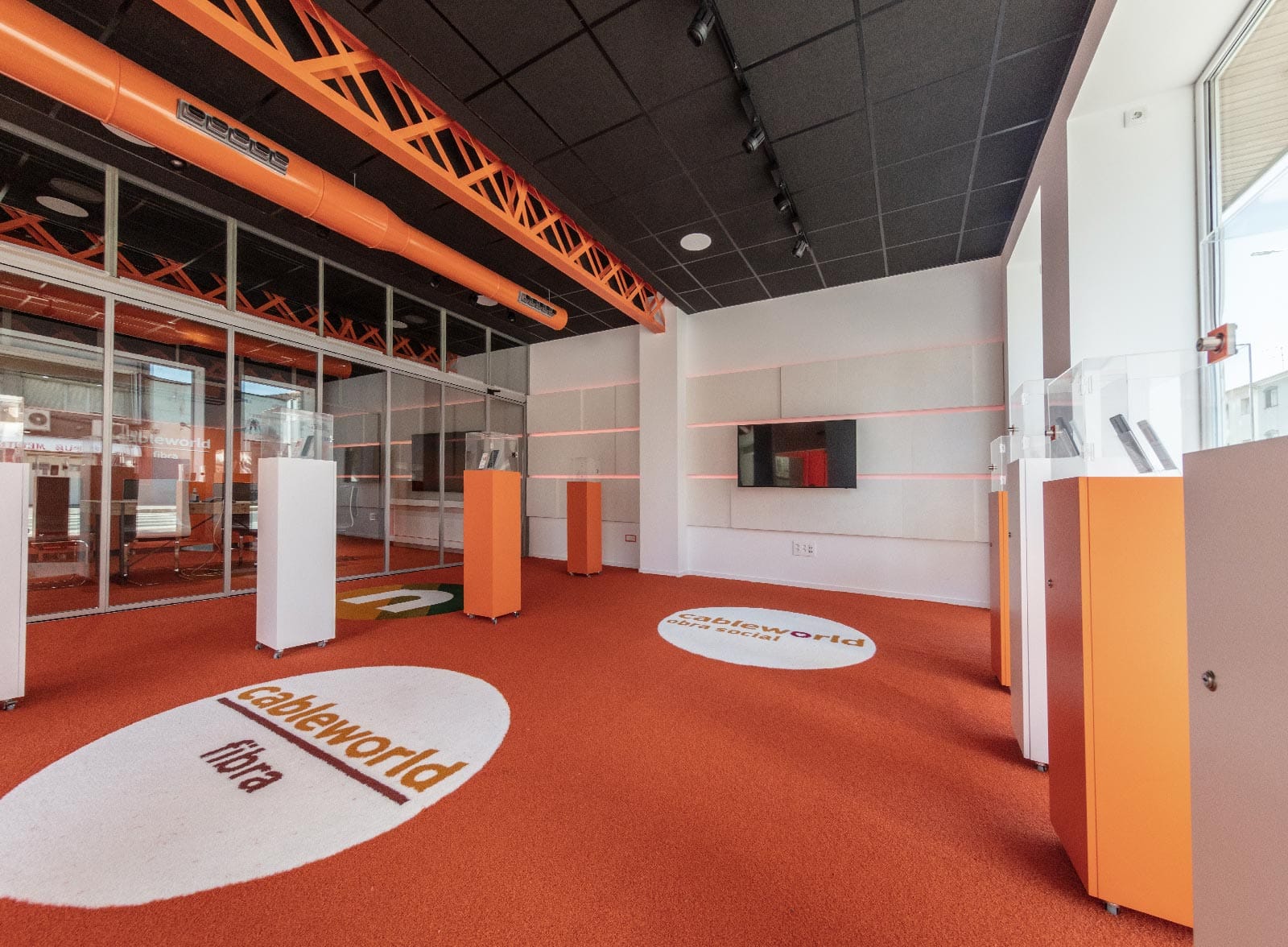
At the Cableworld offices in Novelda, the Fibertex system was implemented to reduce reverberation in high-activity workspaces.
Ceiling-Suspended Elements
When ceilings are high—or when you prefer to leave the existing ceiling untouched—suspended elements offer a way to manage sound while simultaneously creating a new visual plane.
- Baffles and islands made from recycled polyester fiber (part of the Ideaflow family) feature an αw (weighted sound absorption coefficient) of 0.95.
- Acoustic beams, which mimic the appearance of structural beams, also function as sound-absorbing elements.
In our article on ceiling acoustic treatment, we explain when to choose each specific format.
Panels with Volume and Form
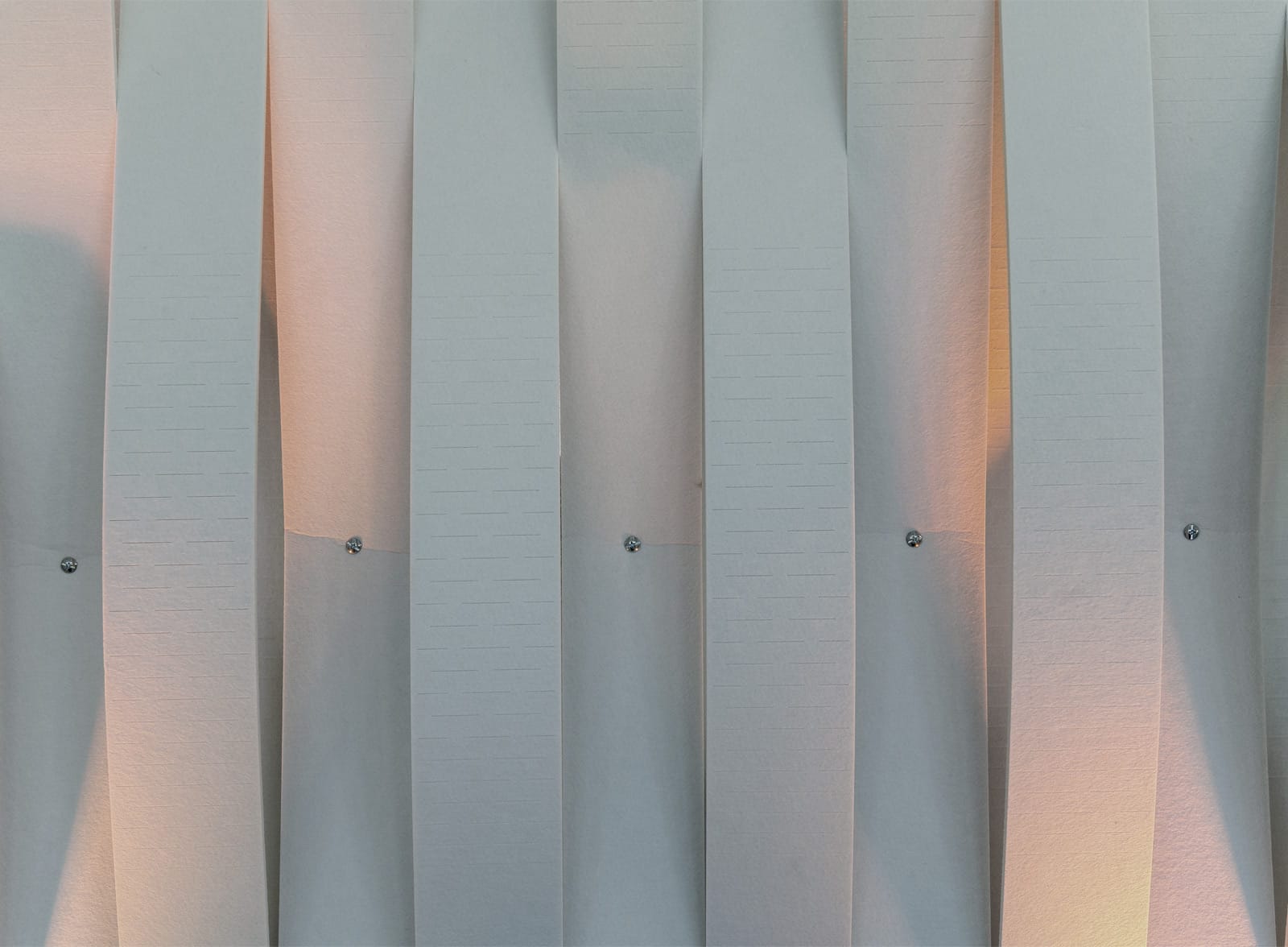
Certain panels add texture or a sense of movement to a wall. The Ideatec Cell system, designed by SummumStudio, utilizes curved panels made from recycled polyester fiber to create a wave-like effect.
These can be configured as either open or opaque, depending on the desired level of privacy, and can be custom-manufactured in heights of up to 3 meters for use on either ceilings or walls.
The Ideaflow range also includes die-cut panels, which allow for the incorporation of designs or patterns directly into the sound-absorbing surface.
Wooden panels
Wood remains one of the most sought-after options when a sense of warmth is desired. Slat, grooved, or perforated panels make it possible to integrate acoustic performance with a natural finish.
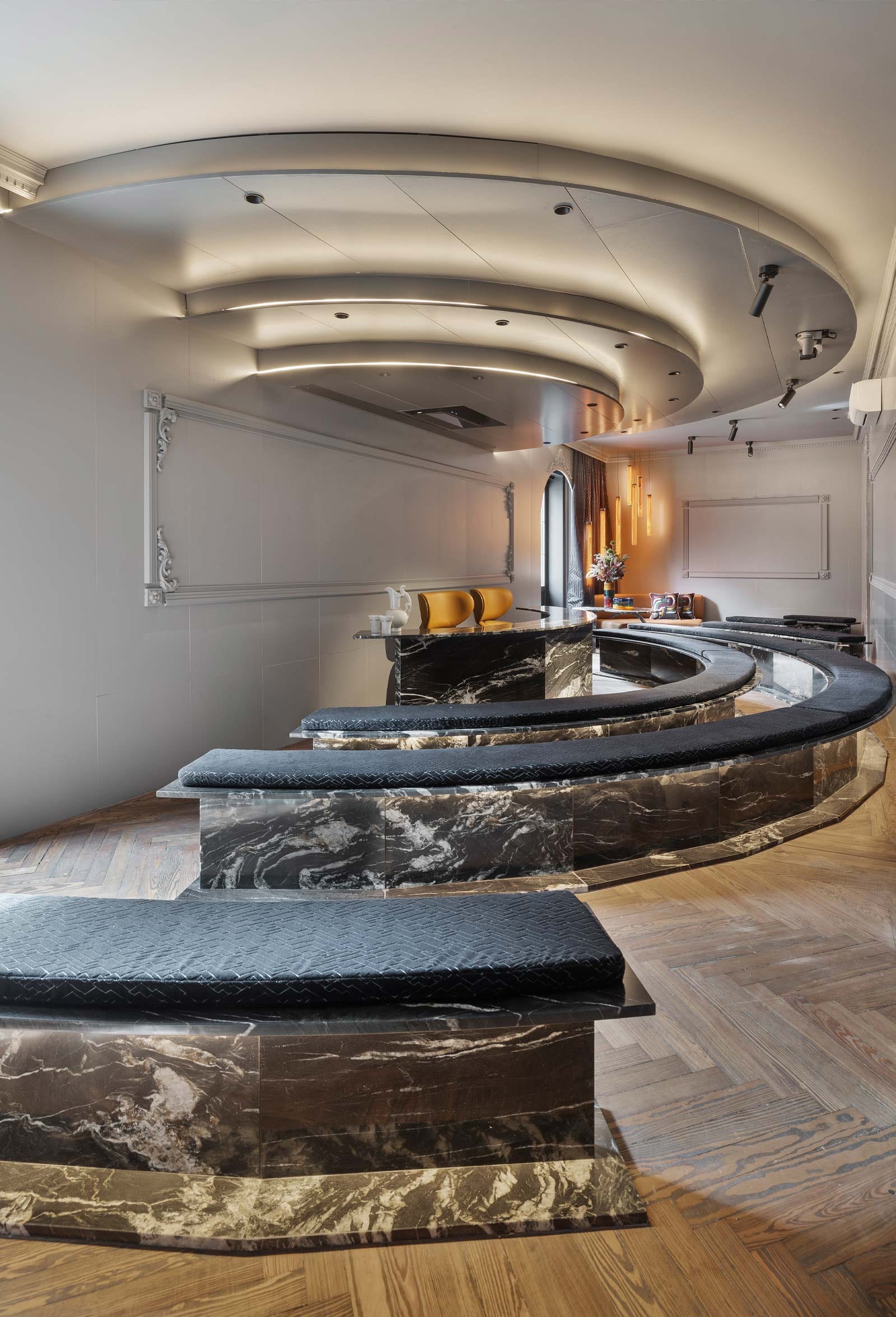
For instance, in the auditorium at Casa Decor 2024 in Madrid, the Ideaperfo Micro 05 system was used to ensure excellent sound intelligibility within a space defined by a strong aesthetic focus.
If this is something you are considering, our article on wooden acoustic panels details the various types and finishes available.
How to Choose Decorative Acoustic Panels
The choice depends on both the space itself and the overall design concept. Here are the key factors we recommend considering.
Start with acoustic requirements
Before selecting colors or shapes, it is important to identify the specific issue within the room—whether it is echo, background noise, or difficulty in speech intelligibility. This will help determine the total surface area that needs to be treated.
Check the absorption value
Two panels that look similar may perform very differently. When reviewing technical specifications, look for the αw value, which ranges from 0 to 1.
In projects with a strong decorative focus, it is common to combine highly visible elements with other treated surfaces that are more subtle or discreet.
Consider the space as a whole
The color, texture, and placement of the panels should harmonize with the lighting, furniture, and materials used throughout the rest of the project. For this reason, we recommend addressing acoustics during the interior design phase.
Factor in usage and maintenance
In high-traffic areas or spaces where panels might be touched, it is best to choose durable finishes. For ceilings, however, you can opt for lighter materials or suspended configurations.
Additionally, be sure to verify the fire-safety requirements (reaction to fire) for the specific type of space.
Where they work best
Decorative acoustic panels are well-suited for spaces where visual appeal is part of the overall experience:
- Offices and workspaces, where they help reinforce company identity.
- Restaurants and cafés, where the sound environment influences customer comfort.
- Hotels and reception areas, where the finish is just as important as performance.
- Showrooms, retail stores, and exhibition spaces.
- Classrooms and educational spaces, where color can help organize and define different zones.
Are you looking for decorative acoustic panels for your project?
At Ideatec, we manufacture decorative acoustic panels—available in fabric, recycled polyester fiber, or wood—for walls and ceilings, with colors and shapes tailored to each individual project.
Consult with our team, and we will help you combine design with sound absorption in your space.