

Decorating to improve acoustics: materials, textures, and solutions that work
When decorating a space, we almost always think about the visual aspects: colors, shapes, furniture. But every choice also has an acoustic effect. The materials that cover walls, floors, and ceilings determine how sound behaves in that room.
A space with hard, smooth surfaces generates more reverberation. One with absorbent textures offers greater clarity and comfort. The good news is that you don't have to choose between aesthetics and acoustics. Many solutions fulfill both functions simultaneously.
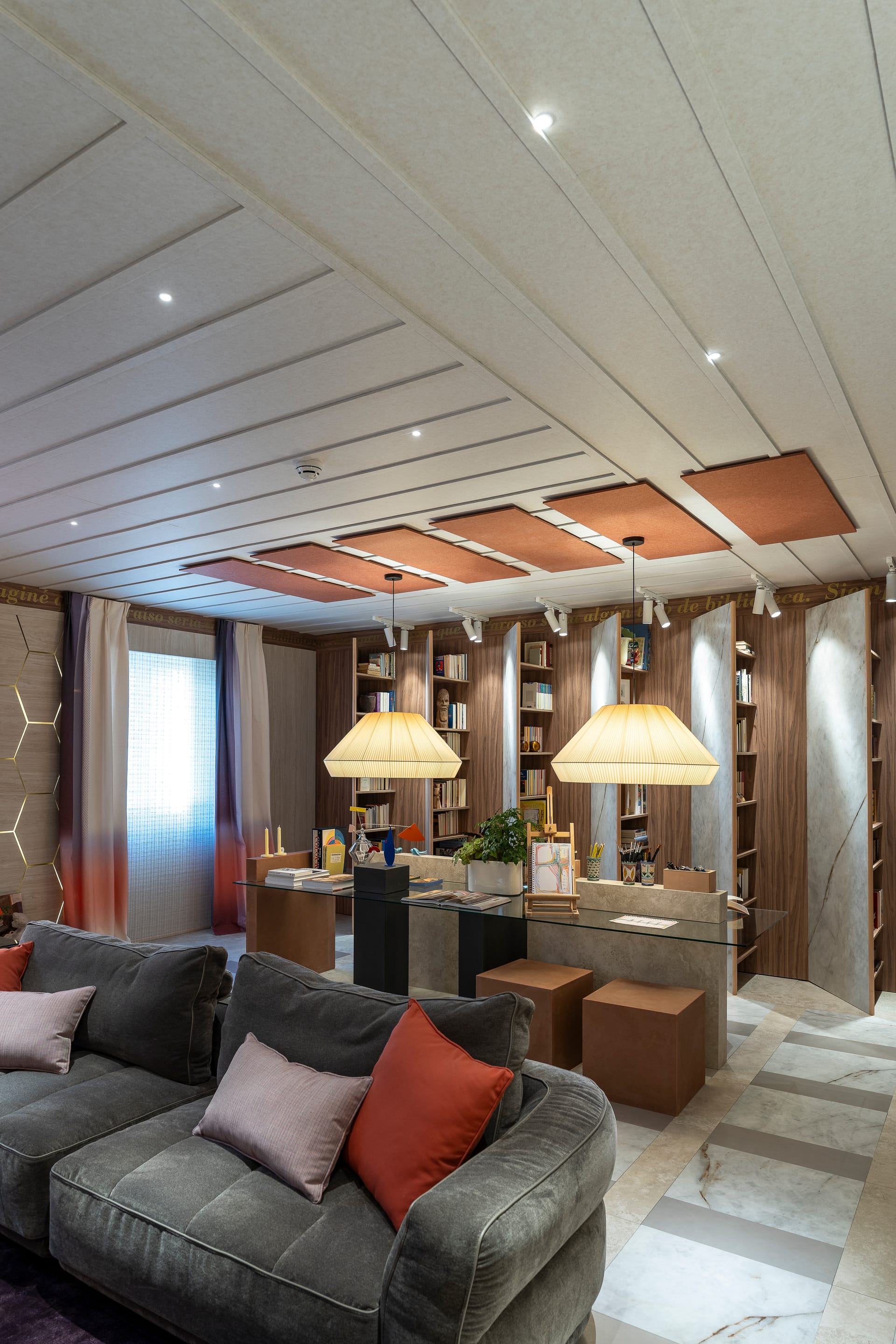
How Decor Affects Sound Behavior
Sound reflects off rigid surfaces such as glass, concrete, marble, or lacquered wood. When a space has many of these surfaces, the sound waves bounce around before dissipating. This produces excessive reverberation, which hinders communication and causes auditory fatigue.
Porous materials or textiles work in the opposite way. They absorb some of the sound energy and reduce reverberation time. To better understand these phenomena, you can consult our article on basic acoustics.
Decorating with acoustics in mind doesn't mean sacrificing style. It means choosing materials that, in addition to being attractive, contribute to the acoustic comfort of the space.
Decorative Elements that Improve Acoustics
Textiles: Curtains, Rugs, and Upholstery
Thick curtains, medium- or high-pile rugs, and upholstered sofas absorb mid and high frequencies. They are the easiest elements to incorporate and have an immediate impact on reducing echo.
A rug on a tile or parquet floor significantly reduces sound reflection in that area. Dense curtains, especially those with pleats, act as sound absorbers across the entire surface they cover.
Cushions and chair upholstery also contribute, albeit in a more localized way. Taken together, these textile elements make a noticeable difference in rooms with a lot of hard surfaces.
Acoustic wall and ceiling coverings
Acoustic panels offer the highest absorption performance and allow you to choose finishes, colors, and formats that integrate seamlessly with the space's design.
Ideafabric, for example, combines an absorbent core with a textile covering available in dozens of colors. It is installed on walls and allows you to create visual compositions tailored to the interior design of each project.
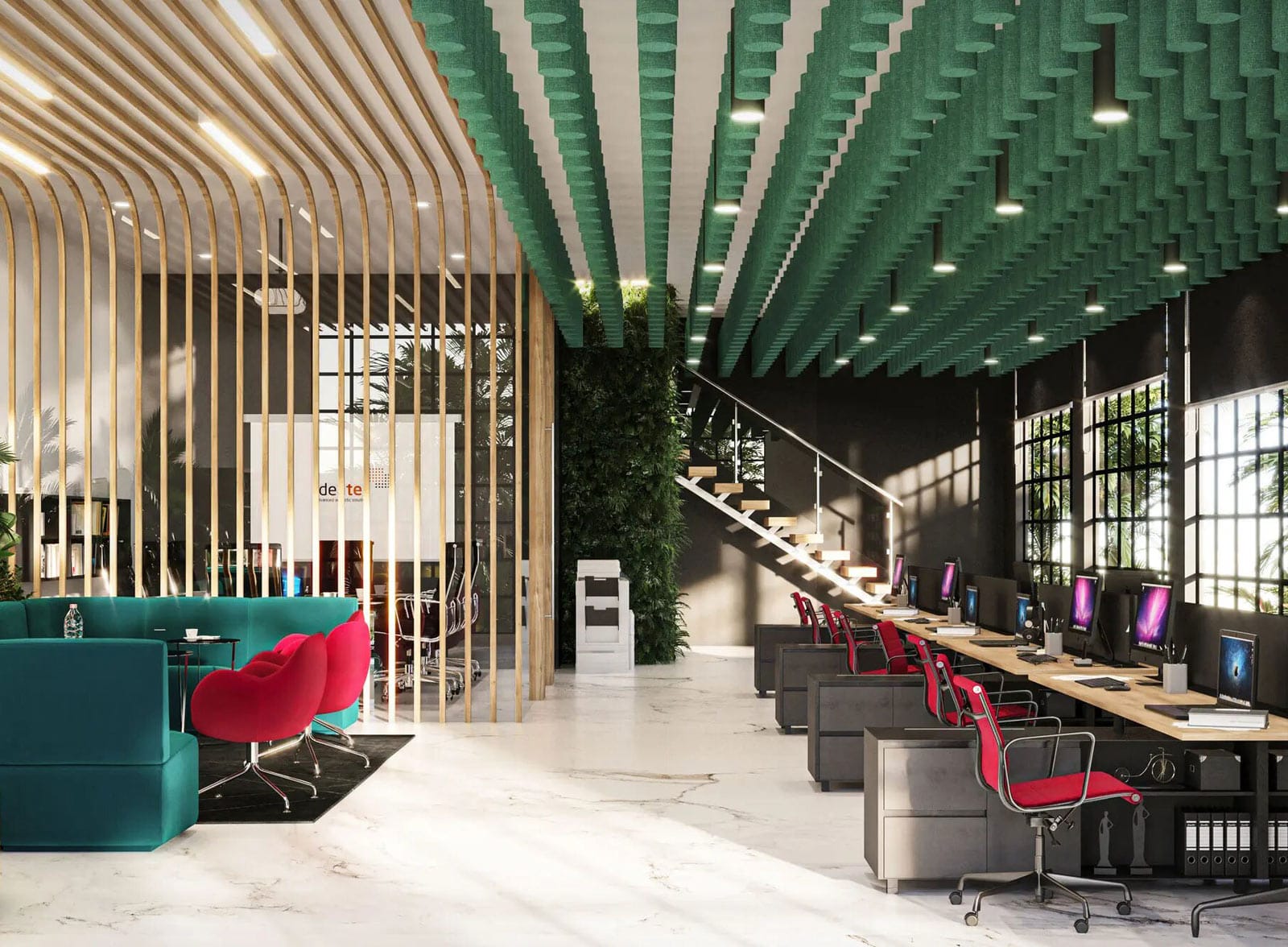
For ceilings, Ideacustic panels are designed to integrate seamlessly as an architectural element. Their format and finish allow them to cover large surfaces without compromising the ceiling's visual cleanliness.
If the project requires a wood finish, Ideawood offers slats with acoustic properties that maintain the warmth of natural wood while providing effective sound absorption. This is a common choice in studios, meeting rooms, and presentation spaces.
Furniture and Space Layout
The arrangement of furniture also plays a role. Bookshelves act as acoustic diffusers, breaking up sound waves and preventing direct reflections. Upholstered partitions or screens with absorbent material help to create zones without requiring construction work.
Even the height at which certain elements are placed can change the acoustic behavior of a room. A space with furniture of varying heights and textures will have a more balanced sound than one with bare walls and low furniture.
Common Mistakes When Decorating with Acoustics in Mind
The most common mistake is treating only one surface. Placing a rug on the floor improves things somewhat, but if the ceiling and walls remain reflective, the problem persists. Acoustics works in three dimensions and requires treatment on multiple levels.
Another mistake is relying on solutions with no real impact. Plants provide minimal diffusion. Egg cartons or thin, low-density foams barely absorb the frequencies that cause the most discomfort in inhabited spaces. Over-engineering is also common. A space with too much absorption feels uncomfortable and dull. The goal is not to eliminate all reflected sound, but to control it so that the space sounds natural and comfortable.
How to plan the acoustic decoration of a space
Before choosing materials, it's important to define the acoustic problem the space has. A room with excessive reverberation is not the same as one where the noise comes from external sources or mechanical equipment.
Once the problem is identified, you can decide which surfaces to treat and with what type of solution. In small projects, sometimes simply incorporating textiles and a few panels in key areas is enough. In more complex projects, a preliminary acoustic study allows you to optimize your investment.
The important thing is that acoustics are considered from the earliest stages of the interior design project, not as an afterthought. Integrating it from the design stage allows for the selection of finishes that serve a dual purpose and avoids unnecessary expenses.
Want to integrate acoustics into your interior design project?
At Ideatec, we design and manufacture acoustic panels that adapt to the style of any space. From textile finishes to wooden slats, each solution combines acoustic performance and aesthetics.
Consult with our team, and we'll help you choose the materials that best suit your design.