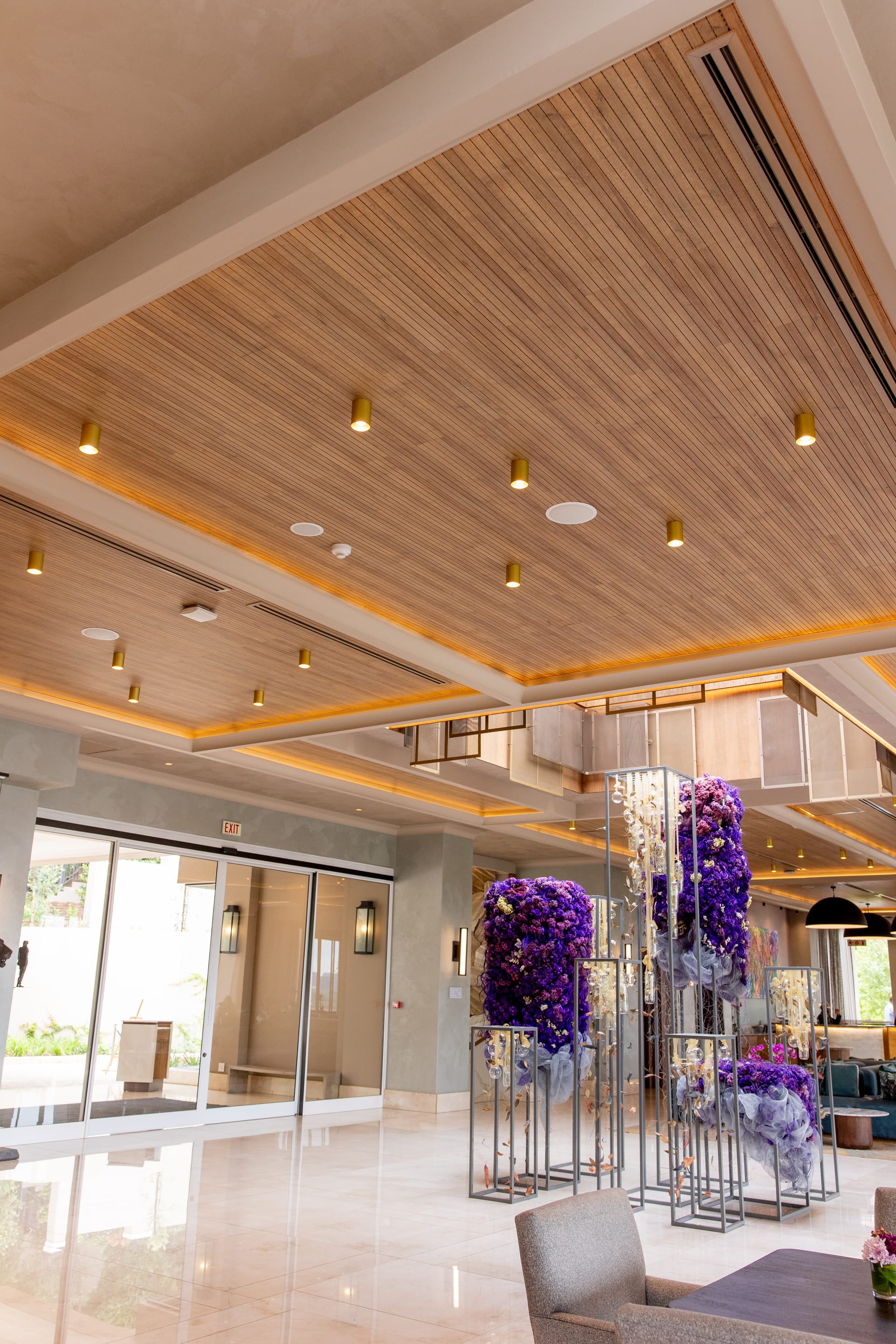
Sound intensity and interior design: achieving both aesthetics and functionality. We'll tell you everything about sound intensity: its measurement, its importance in architecture, and how it affects hearing health. Learn more.
In interior design and architecture, acoustics is a fundamental pillar. That is, it's not just about aesthetics, but also functionality. And this implies considering how environments behave or are perceived in terms of sound. Therefore, one of the key concepts to keep in mind is sound intensity.
While it's often confused with other terms, such as volume, the reality is that it's much more important than you might initially think. This concept is behind the measurement of the energy transported by a sound wave. Based on this, it's possible to achieve a much more comfortable environment in terms of sound.
For example, at Ideatec you can find panels that take this variable into account, as we believe that any environment should be 100% optimized from an acoustic standpoint. If you're interested in learning more about this concept, keep reading.
Sound intensity is a concept that differs from others.
Now, what is the formal definition of this term? Intensity is understood as the amount of acoustic energy that passes through a surface, in a specific direction, and in a specific unit of time. Energy is measured in watts per square meter, which you'll find as "W/m²".
Why is it so important? Simply put: because the greater the intensity, the more energy in a space. However, while related, intensity is not the same as the following concepts:
- Frequency: This refers to the number of vibrations per second. Whether a sound is high-pitched or low-pitched is determined by its frequency.
- Volume: There is no inherently "high" or "low" volume. This concept actually depends on each person's subjective perception, although there are safe and recommended volumes for listening to music or for other activities, for example.
- Sound pressure: This measures the force that a wave exerts on a surface. However, it's not possible to measure direction.
The key properties of sound
Understanding each concept, you can learn about the key properties of sound:
- Duration: The length of time a sound lasts or "exists."
- Timbre: The difference, for example, between a violin and a guitar. It may be the same note, but it sounds different. This is due to timbre.
- Frequency. Whether a sound is low or high, as we mentioned earlier.
- Sound intensity. Now, the key concept for knowing if the energy level of a sound is loud, soft, or intermediate.
Units of measurement: decibels (dB)
Let's look at a related topic. The most common unit for expressing sound intensity is the decibel (dB). While energy is measured in watts, sound intensity is measured in decibels.
Decibels (dB) use a logarithmic scale to express sound intensity. This scale is fundamental because the human ear perceives changes in loudness more closely to a logarithmic progression than a linear one. In other words, it's crucial to understand that the relationship between decibels and sound energy or intensity is not direct:
- A 3 dB increase represents approximately a doubling of the intensity.
- A 10 dB increase means the intensity has multiplied approximately tenfold.
- Consequently, a 20 dB increase would imply that the intensity is one hundred times greater.
For example, in everyday life we are exposed to these sound intensity levels:
- 10 dB: breathing. It is audible to humans, but almost imperceptible.
- 60 dB: conversation. It is normally perceived by a person, unless there are hearing problems.
- 90 dB: traffic. The sound is much more noticeable. Therefore, prolonged exposure can cause problems.
- 130 dB: live concerts. While it is possible to hear it for a while, after a few hours one experiences a pain threshold.
How to measure sound intensity? Some Instruments
If you want to quantify this intensity, you can use several tools:
- Sound level meters: These are portable devices. They easily measure sound pressure and then convert it to decibels. They are used in environmental measurements.
- Intensity microphones: These usually use two microphones placed close together. This way, both the pressure and the velocity of the particles involved are measured, and the total energy is calculated.
- Acoustic dosimeters: These are commonly placed on the human body to monitor sound exposure over time. For example, in certain jobs where people are constantly exposed to sound.
And in practice? How is sound intensity measured?
Below, we tell you all about its implementation.
Applications in architectural acoustics
Architectural design also prioritizes the acoustics of the space. Thus, intensity becomes essential to control reverberation and echo. That is, when there are spaces with hard surfaces, there can be echoes.
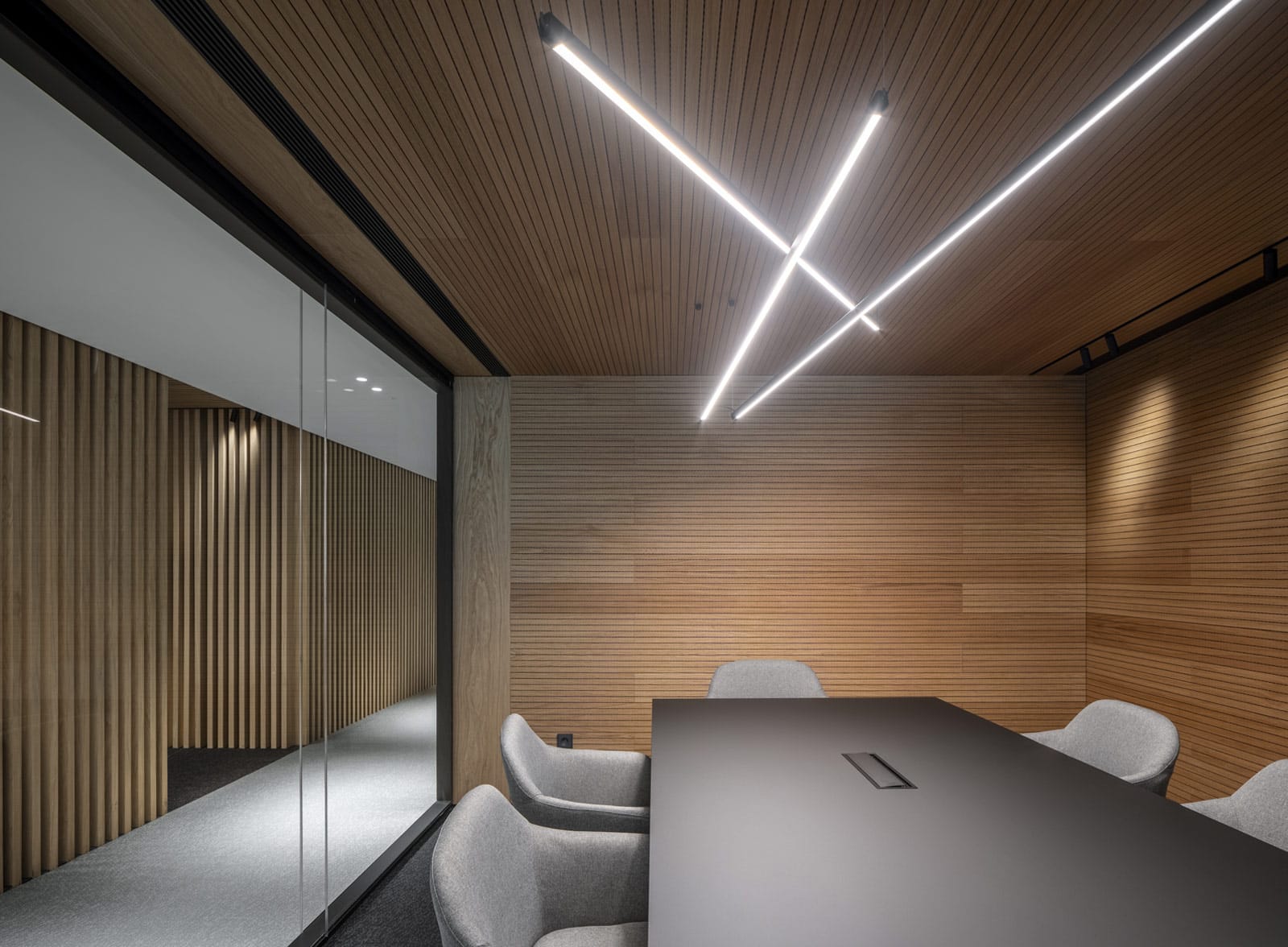
And how to solve this? Undoubtedly, modular acoustic panels Sound-absorbing panels are a great alternative. For example, Ideawood panels are made of solid wood and are perfect for combining both the elegance of the materials with acoustic conditioning.
If you're wondering how to optimize acoustic comfort, this will help:
- In classrooms, it's always key to ensure that the sound is perceived clearly.
- In restaurants and hotels, noise overload should be avoided.
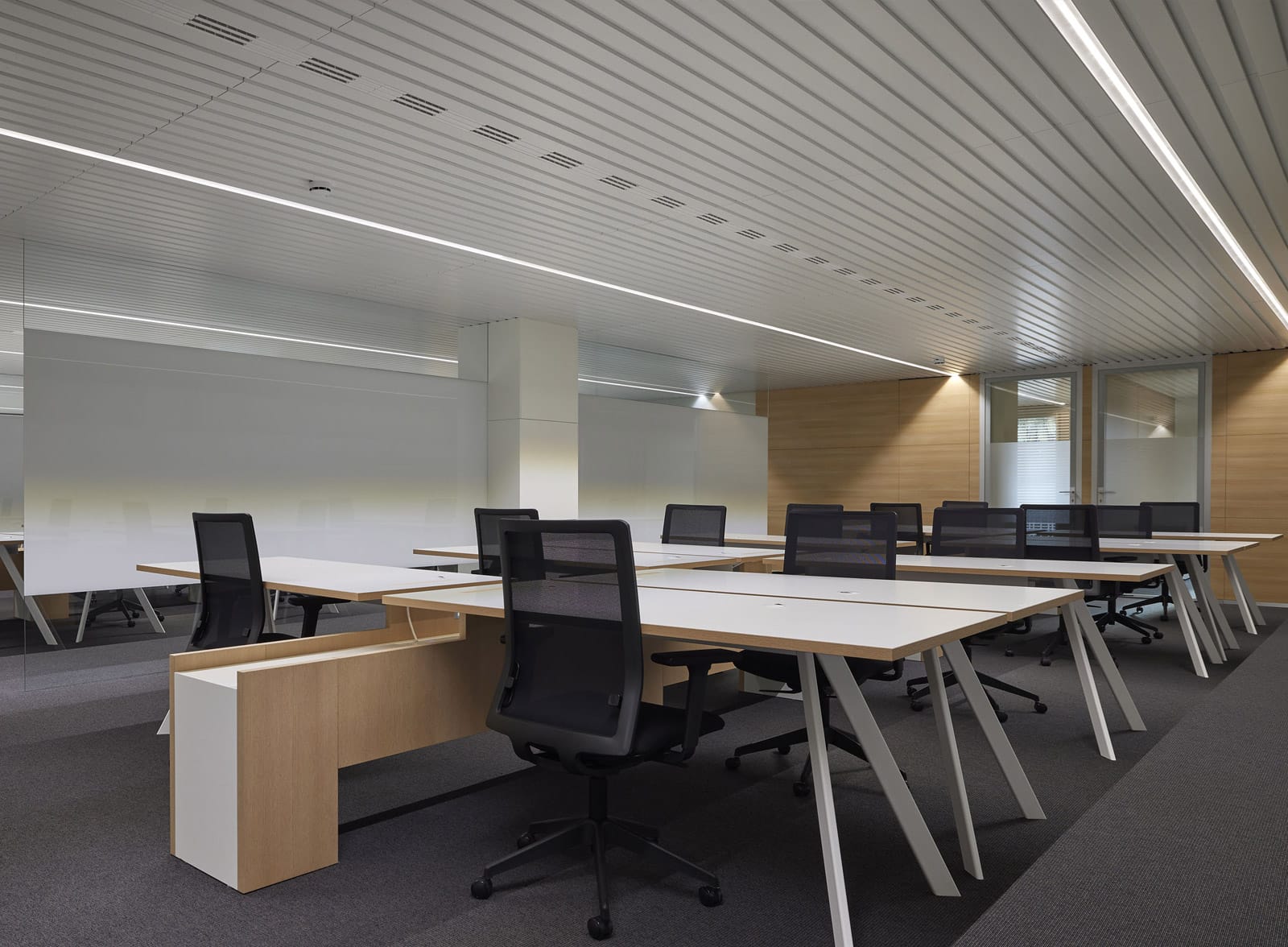
- In offices, the goal is to eliminate any auditory fatigue.
Importance of sound intensity for hearing health
If you are continuously exposed to high levels of intensity, your hearing could be damaged with:
Varying degrees of hearing loss.
Auditory stress.
Tinnitus (constant ringing in the ear).
In this regard, all workers should have noise exposure below 85 dB for 8 hours to avoid risks or problems in the ear (OSHA, 2024).
Use in sound engineering
Understanding sound intensity is necessary when working in studios. In fact, during recording and mixing, input and output gain are always adjusted according to the intensity of each source. But that's not all; the very design of recording studios is based on this concept!
Professional studios also use absorbent panels to prevent echoes. For this reason, a crucial concept emerges: attenuation, which consists of progressively reducing the intensity of sound as it passes through a material or moves away from the source. This makes it possible to achieve the desired results.
Now you know the basics about sound intensity.
Sound intensity is very important if you want a space to have the desired sound. Ultimately, knowing how to measure and interpret it becomes essential, as this will allow you to improve the acoustic experience. If you need acoustic panels to improve the acoustics of a space, don't hesitate to visit our website and see our complete portfolio.
Bibliographic References
Britannica (2025, March 21). Sound Intensity | Decibels, Waveforms and Pressure. Gamal, M. (2025, May 6). Internal acoustics: effective noise mitigation techniques in architecture. ArchDaily.
Hernández, R. (2023, August 14). All the keys to achieving a quiet home. Architecture and Design.
Moreras, N. (2025, February 2). Sound, your ally for well-being: what neuroarchitecture says.
OSHA (2025). Occupational Noise Exposure.